
MSD Candidates- I will use this post and update throughout our class. Please be sure to read through on your first visit. The most recent posting and announcement will be at the top.
Session 6: Navigation Dives
Monday 7.26.2021 we will work in short, multi-leg, and long distance nav swims. Splash is at 7. Please study up for this.
We will also be doing our swim test at 6 pm. See the Master Diver page for information.
Session 5: MSD Dive Experiments Night
Please come prepared to do the following experiments:
- Neutral and slightly negative weight for various wetsuits
- 7mm one piece
- 7 mm top and bottom
- 3 mm shorty
- Hood
- Glove
- Tank full
- Tank (at given PSI)
You will need to bring weights, anything you want to test, a way to secure weights and gear
Session 4: MSD Dive Night 7.012.2021
Projects: Make a lift bag retention band and attach to BCD
Meeting at Barclay Bay Upper. Plan is to find and lift heavy object.
Session 3: Physiology 6.29.2021- 7.05.2021
• Respiration
• Circulation
• Immersion Effects on Respiration and Circulation
• Breathing Problems
• Decompression Sickness (DCS)
• Circulatory Problems
• Barotrauma
• Effects of the Diving Environment
• Gender
• Fitness for Diving
• Nutrition
• Physical Fitness
Student Performance
By the end of the lesson students will be able to:
• Describe how diving effects respiration and circulation.
• State the cause, effects, general first aid and prevention for common diving maladies.
• Describe medical problems believed to increase health risks while diving.
• List at least five ways to achieve and maintain physical fitness for diving.
Respiration
• Respiration anatomy
• Mechanics of breathing
Circulation
• The blood’s role in bringing you oxygen.
Immersion Effects on Respiration and Circulation
• Blood centralization
– Most centralization is due simply to buoyancy – blood just floats up there, as it does in astronauts during the microgravity of space flights.
Breathing Problems
• Breathing resistance
• Carbon dioxide toxicity
• Hyperventilation and Shallow water black-out
• Overexertion
• Carbon monoxide toxicity
• Oxygen toxicity
– Central nervous system (CNS) oxygen toxicity occurs much more quickly at oxygen partial pressure above a range of about 1.4 to 2.0 atmospheres, or seven to ten times normal.
• Drowning and near drowning
• Nitrogen narcosis
Decompression Sickness (DCS)
• Cause of DSC
• Effects
• First aid and prevention
Circulatory Problems
• Cramps
– Effects
– First aid and prevention
• Carotid sinus reflex
– Effects
– First aid and prevention
• The dive reflex
– Effects
– First aid and prevention
Barotrauma
• Definition
• Lung barotrauma
• Middle ear barotrauma
• Inner ear barotrauma
• Sinus barotrauma
• Dental barotrauma
• Gastrointestinal (GI) barotrauma
Effects of the Diving Environment
• Chilling
• Over heating
• Seasickness
• Disorientation
• Vertigo
• Dehydration
Gender
• Common myths about gender in diving:
Fitness for Diving
• Health and medical considerations
• Cardiovascular disease
• Lung disorders
• Nervous system disorders
• Diabetes
• Ear and sinus disorders
• Smoking, drugs and alcohol
– Smoking. Cigarette smoking increases your risk of bronchitis, emphysema, lung cancer, cardiovascular disease, high blood pressure, and other conditions that reduce quality and length of your life.
Nutrition
• General nutritional advice to divers:
– General nutritional advice to divers is the same as to anyone else for good health and reduction of risk for heart disease, cancer, stroke, diabetes, hypertension, obesity, and other health problems.
Physical Fitness
• Aerobic fitness
• Muscular strength
• Muscular endurance
• Flexibility
End of Unit 4
Diving Physiology
• Respiration
• Circulation
• Immersion Effects on Respiration and Circulation
• Breathing Problems
• Decompression Sickness (DCS)
• Circulatory Problems
• Barotrauma
• Effects of the Diving Environment
• Gender
• Fitness for Diving
• Nutrition
• Physical Fitness
Student Performance
By the end of the lesson students will be able to:
• Describe how diving effects respiration and circulation.
• State the cause, effects, general first aid and prevention for common diving maladies.
• Describe medical problems believed to increase health risks while diving.
• List at least five ways to achieve and maintain physical fitness for diving.
Session 2: Equipment 6.22.2021- 6.28.2021
Projects and Academics
Projects:
Make a Lanyard for Your Dive Gear (Link)
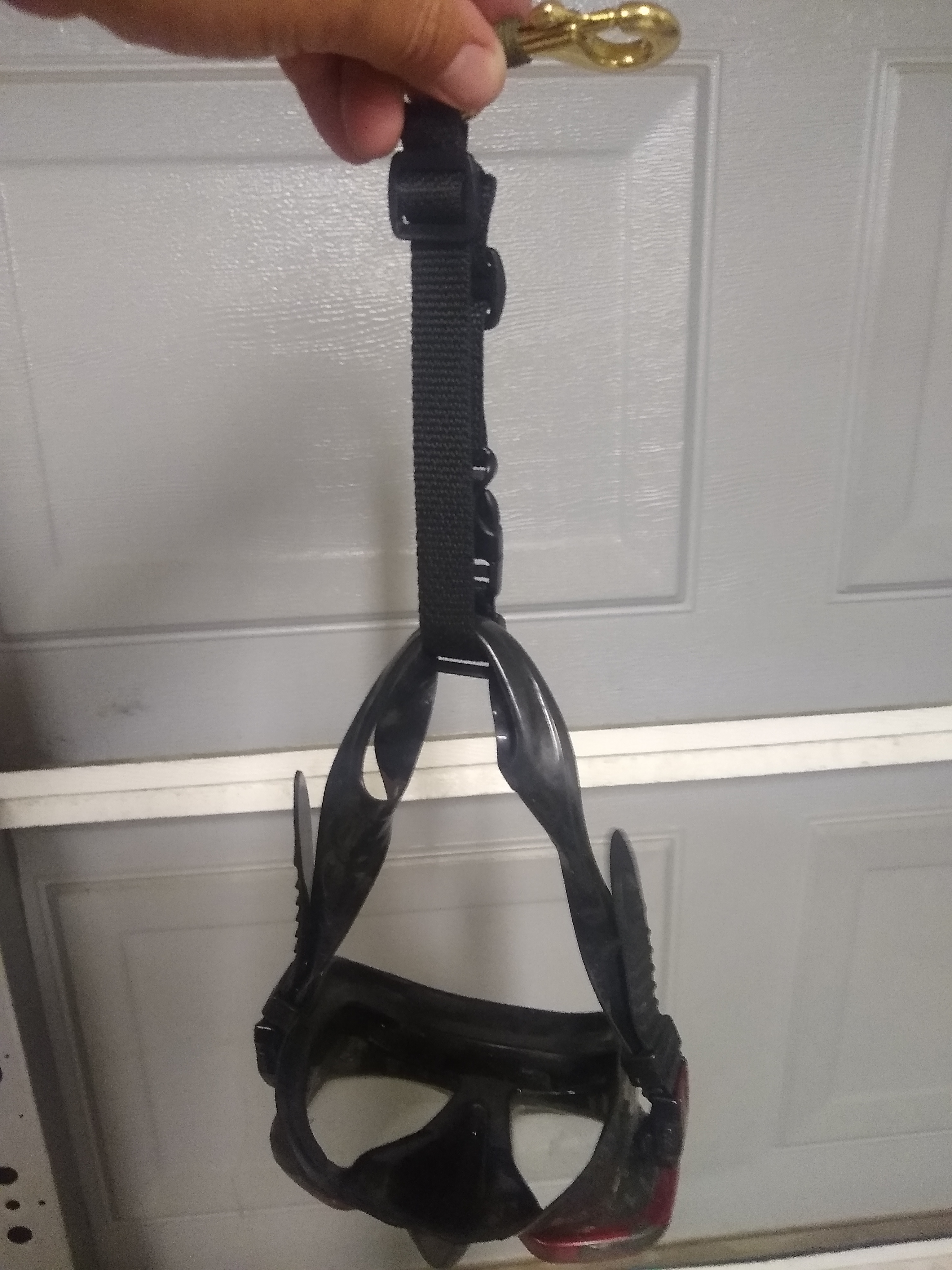
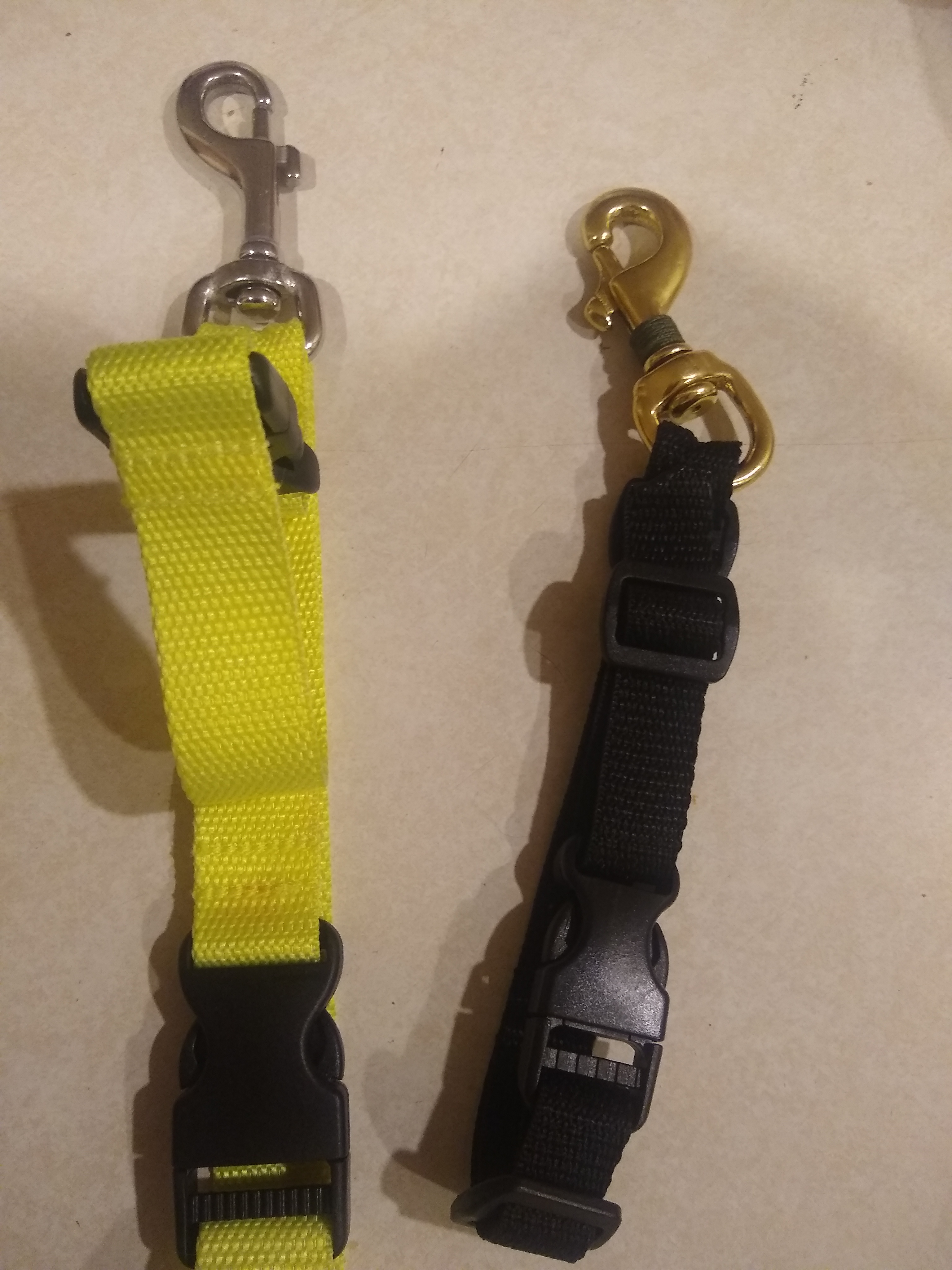
Make a Fin and Mask Clip Set for you BCD
Dive Journal (Link)
Academics:
Chapter 1 Equipment:
Unit 2: Diving Equipment
• Basic equipment
• Scuba cylinders
• Scuba regulators
• Diving instruments
• Buoyancy compensators
• Weighting systems
• Diving suits
• Accessory equipment
Student Performance
By the end of the lesson students will be able to:
• List the basic equipment you need to go skin diving.
• Describe scuba cylinders, including types and sizes, valves, maintenance, and inspections.
• Describe regulators and the equipment usually attached to the regulator.
• List the different types of diving instruments.
• Describe the types of buoyancy control devices and how to select one that meets your needs.
• Describe the use of weighting systems.
• List the different types of diving suits used for warmth and protection and describe how to choose the right suit for your diving conditions.
• List the accessory equipment that makes diving more enjoyable.
Buying Equipment for Diving
There are several reasons to go to a specialized retailer such as a NAUI dive store.
• You can see and wear gear before you buy.
• Scuba retailers can help you with adjusting the equipment.
• Scuba retailers provide instruction for specialized gear.
• Scuba retailers usually service equipment.
• Scuba retailers rent equipment.
• Scuba retailers are your source for scuba cylinder fills and last minute required items.
Basic Personal Equipment
Comfort and fit are extremely important!
• Mask
• Snorkel
• Booties
• Fins
• Gloves
Masks
Enables you to see underwater objects clearly.
• The most important consideration is the mask fits your face.
• Some of the features of masks are essential.
• There are many optional features.
New Masks
The lenses are covered with a thin film of lubricant.
• You can use toothpaste to remove this lubricant.
• Washing with toothpaste helps prevent the mask from fogging.
• Each time you don your mask you will need to prepare it.
Snorkels
The snorkel enables you to breathe normally while you watch the beauty beneath you.
• There are many different features.
• Some features can be added.
Selecting a Snorkel
Snorkels have both essential and optional features.
• Two most important things to consider.
• Other considerations.
Booties
Booties provide protection and warmth for your feet.
• Booties are made from neoprene rubber.
• Different types of booties.
• The bootie should fit snugly but comfortably on your foot.
Fins
Fins provide the way to move yourself through the water.
• There are two basic types of fins.
• Size of the fin determines size of the foot pocket.
• Choose a fin that fits snugly.
• If you are using fins that require booties, be sure to try them on at the same time.
Gloves
Gloves provide protection and warmth for your hands.
• Your gloves should fit snugly and allow you to move your fingers easily.
• You must be able to handle your equipment while wearing gloves.
• Be environmentally conscious!
Floatation Device
Divers should wear some kind of personal floatation device for snorkeling or skin diving.
• The most commonly used is an inflatable vest.
Maintenance
Maintaining your basic gear is simple.
• You should rinse your gear with fresh water after every diving day.
• Do not leave the gear in direct sunlight.
• Make sure your gear is dry before storing it away.
• Inspect the gear regularly, especially before a dive trip.
Review on Basic Equipment
What have you learned so far?
• What are the two of the most important features for the selection of your basic equipment?
• What is one feature not essential in a dive mask?
• What are three factors that can reduce the ease or efficiency of breathing through a snorkel?
Scuba Cylinders
Scuba cylinders allow you to store large amounts of air in a small place.
• Scuba cylinders are also known as bottles or tanks.
• They are regulated by:
– Department of Transportation (DOT) in the USA
– Canadian Transport Commission (CTC) in Canada
• The air in a scuba cylinder is highly compressed:
– The pressure ranges from 120 bar (1800 psi) to 310 bar (4500 psi)
Scuba Cylinders
Most cylinders are made of aluminum or steel.
• Aluminum cylinders
• Steel cylinders
Scuba Cylinders
Cylinders come in many different sizes.
• In the Metric system the size of the cylinder is expressed as the actual volume of the cylinder.
Scuba Cylinders
Markings are placed on the shoulder of each cylinder and provide important information.
• The Markings
Scuba Cylinders
Accessories.
• Tank Boot
– Allows rounded bottom cylinders to stand up.
– Protects the bottom of the cylinder.
• Plastic Net
– Protects the exterior and paint of the cylinder.
• Dual Manifold
– Hooks two cylinders together sharing a common valve.
Cylinder Valves
Every cylinder must have a valve to hold the air in. They act much like a water faucet. There are three types of valves.
• “K” Valve
• “J” Valve
• DIN Valve
Cylinder Valves: other considerations
Every cylinder is equipped with a pressure relief disk or burst disk, which allows excess pressure to vent safely.
• Maintenance
• Visual Inspection
• Hydrostatic Testing
Scuba Cylinder Storage
You should store cylinders for any long term with some pressure in the cylinder.
• Steel cylinders
• Aluminum cylinders
• Never leave a cylinder standing unattended.
Review on Scuba Cylinders
What have you learned so far?
• What is the difference between a “J” valve and a “K” valve?
• What two types of metal are used to make cylinders?
• How often do cylinders require a visual inspection?
• How often do cylinders require a hydrostatic test?
Regulators
The scuba regulator is a mechanical device that delivers air to you on demand.
• Function
• The main parts
Regulators: The First Stage
The high pressure air from the cylinder is reduced to approximately 9.6BAR (140psi) above ambient.
• Air from the first stage is delivered to the second stage through a low-pressure hose.
• The first stage has a number of outlets or ports to which hoses and pieces of equipment are attached.
• The low pressure ports allow hoses to be attached.
Regulators: The Second Stage
The second stage further reduces the air pressure from approximately 9.6 bar (140 psi) above ambient.
• The air you breathe is always at the pressure needed by your body, no matter how deep you are underwater.
• Some regulators offer higher performance.
Regulators: Alternate Air Sources
It is a standard practice for divers to be equipped with an alternate air source that must be visible and easy to get to.
• Octopus regulator
• Combination regulator and power-inflator
• Contingency scuba
Gauges
Divers must rely on gauges and instruments to tell them depth, bottom time, direction and air supply.
• Submersible pressure gauge (SPG)
• Depth gauge
• The SPG and depth may be combined into a console or used separately.
Compass
The compass is an important reference instrument.
• The compass enables you to know your position or direction of travel under or above the water.
• Diving compass requirements.
Maintenance
Your life-support system should be carefully maintained.
• Steps you can take.
• Steps that must be performed by a qualified technician.
Review on Regulators
What have you learned so far?
• What is the most important criteria when selecting a regulator?
• What must be replaced before rinsing a regulator?
• What is an advantage to using a octopus regulator?
• What is the primary advantage to using contingency scuba instead of an octopus regulator?
• What is the most important criteria when selecting a regulator?
• Which depth gauge is usable only at shallow depths?
• What measures the air pressure in your cylinder?
Additional Instruments
Some additional diving instruments that you might want to consider using include:
• Timing devices
• Dive computer
• Back-up instrumentation
• Maintenance
Review on Instruments
What have you learned so far?
• What calculates your remaining allowable bottom time while diving?
• What two things must a dive watch do?
• What are two proper maintenance items for your instruments?
Buoyancy Control Devices
Buoyancy control is one of the most important skills you will learn as a diver.
• A buoyancy control device (BCD) or buoyancy compensator
• Features
• Types
BCD: Integrated Weight Systems
Some BCs enable you to integrate or add your weights directly to the BC.
• The advantages of the weight integrated:
– No weight belt.
– Weights cannot slide around.
– Weight is not supported solely by your back.
• Disadvantages to the weight integrated system:
– Once assembled, it can be heavy and awkward to handle.
– Hard to tell how much weight is on the BC just by looking.
BCD: Selection and Maintenance
The best way to select a BC is to try different models.
• Selection:
– See which is the most comfortable.
– Match the type of diving you will be doing.
– Try on the BC with a cylinder attached.
– The controls must easy to locate and operate.
• Maintenance:
– You should rinse your BC internally and externally.
– Rinse the inside with the following:
o Fill with fresh water
o Slosh
o Drain
– Store in a cool and dry place, with air in the bladder.
Review on BCDs
What have you learned so far?
• What are the three main types of BCs?
• What are two essential features found on all BCs?
• Why should you rinse the inside of your BC?
Weights and Weight Belts
You wear lead weights when you are diving to offset the buoyancy of your body, wetsuit and other equipment.
• Types of weights
• Weight belts, harnesses and weighting systems
• Quick release of weights
Review on Weights and Belts
What have you learned so far?
• The most important feature of the weight belt?
• What does a compensating weight belt do?
• Why might divers prefer soft weights over molded lead weights?
Diving Suits
Divers must wear a thermal-protection diving suit in all but the warmest waters.
• The amount of insulation depends on:
– Water temperature
– Activity level during the dive
– Your build, body fat, etc.
• Three types:
– Dive skins
– Wetsuits
– Dry suits
Diving Suits
Different ranges of temperature feel comfortable to different divers.
• Dive skins
– Tropical waters
– Protective covering to avoid injuries and sunburn.
– Most common types, Lyrca and Polartec.
• Wetsuits, made from neoprene rubber
– Must fit precisely and snugly.
– Water that is trapped in the suit keeps you warm.
– Available from 2 to 7mm in thickness and styles:
o Shorty
o Farmer john
o Step-in
o One piece
Diving Suits
Different ranges of temperature feel comfortable to different divers.
• Drysuits:
– Designed to keep you dry.
– Used in colder water.
– More expensive than wetsuits.
Diving Suits: Wetsuit options
If your measurements are different from standard sizes you might consider a custom made wetsuit.
• Options for wetsuits can include:
– Zippers at the wrist and ankles
– Knee pads
– Spine pad
– Pockets inside the wetsuit
– Sheaths to hold a knife
– Attached hood
– Pockets on the outside
Diving Suits: Choosing the right suit
The correct suit for the conditions is one of the keys to enjoying a dive.
• Use the following guidelines when deciding what type of diving suit to wear:
– 27° C (80° F) and warmer water
o Dive skin
– 23° C to 30° C (75° F to 85° F) waters
o 2 to 3mm full wetsuit or shorty
– 13° C to 27° C (55° F to 80° F) waters
o 5 to 7mm full wetsuit
– 2° C to 16° C (35° F to 60° F) waters
o Full dry suit
– 2° C (35° F) and colder waters
o Special training and equipment are needed
Diving Suits: Maintenance
You should rinse your diving suit with fresh water after every diving day.
• Maintenance includes:
– Rinse dive skins and wetsuits inside and out.
– Commercial products are available to help clean your suits completely before storage.
– Store your suits on wide hangers designed especially for them.
Review on Diving Suits
What have you learned so far?
• Which suit should be used for warm, tropical diving?
• Which suit is made from neoprene rubber?
• Which suit uses an under garment?
• Which suit requires specialized training?
Accessory Equipment
Accessories are available that can make diving more enjoyable.
• Clips enable you to attach your instruments.
• A dive knife is a working tool used for many purposes.
• You need a gear bag to transport your gear.
• Diver down flag lets others know you are underwater.
• A logbook is your record of experience in the water and level of training.
• It is a good idea to have a first aid kit on any dive trip.
Accessory Equipment
Some other useful accessories are:
• Underwater slate
• Goodie bag
• Underwater light
• Marker buoy and line
• Spare parts kit
• Checklist
Student Performance: By the end of the lesson students will be able to:
• List the basic equipment you need to go skin diving.
• Describe scuba cylinders, including types and sizes, valves, maintenance, and inspections.
• Describe regulators and the equipment usually attached to the regulator.
• List the different types of diving instruments.
• Describe the types of buoyancy control devices and how to select one that meets your needs.
• Describe the use of weighting systems.
• List the different types of diving suits used for warmth and protection and describe how to choose the right suit for your diving conditions.
• List the accessory equipment that makes diving more enjoyable.
Session 1: Course Introduction (9.21.2021)
I have designed this course to be a true milestone in your diving career. Please make sure you register and start your on-line training. My Instructor Number is 31192. You must enter that code when you register.
Welcome to the Master Scuba Diver Workshop I am doing for Boise Scuba Center. Here I will post dates and times of our classes and dives. I will also talk about expectations for the workshops and post the syllabus and checklist for items to complete.
Since I am trying to just get basic info out right now, our orientation will be June 21 at 7pm at the Neptune Warrior Head Quarters located at 2470 W Whitestone Drive in Meridian. Please bring a lawn chair, writing supplies, and any MSD course materials you may have. I highly recommend the MSD workbook from NAUI.
For each session you will attend a lecture on the course material. This is not a regurgitation of the book but rather a discussion about the content to better understand the subject area. We will also do project work during this period. You are not required to attend all lectures. Approximately 20-24 hours of lecture and project time will be scheduled, you are required to attend 12-14 hours to complete this task.
Below is the checklist for completion of the course:
| Master Diver (Non-Neptune) |
| Prerequisites |
| 25 Dives |
| Advanced Diver or approved equivalent experience that includes deep, navigation, night, and competent diving skills. |
| Rescue Scuba Diver |
| Academic Requirements |
| Completion of NAUI Master Scuba Diver On-Line Training |
| 12 Hours of In-Class Activities |
| Completed Journal with Dives, Experiments, and Projects. |
| Complete Required Reading and File Report (Select One) |
| -Scuba Confidential (Simon Pridemore) |
| -Blue Mind (Wallace J. Nichols) |
| -Surviving Survival (Lawrence Gonzales) |
| -Approved Reading |
| 24-48 Hours Mentoring |
| Dives (Must have total of 60 dives total at completion for MSD) |
| Search and Recovery (Select 2) |
| Circle Searches |
| Semi Circle Searches |
| Jack-Line Searches |
| Lift and Move Heavy |
| Navigation |
| 500 yd Course |
| Night Nav Point to Point |
| Day Nav Long Distance |
| Night Nav Long Distance |
| Night |
| Buddy Line Dives |
| Set up Shore Line Lights |
| Total Black Out Simulation |
| Air Consumption (Select 2) |
| Sac Rate Dive |
| Experiments |
| -Free Flow |
| -Spare-Air |
| Underwater Mapping (2+) |
| Deep Dive (2) |
| Elective Specialty Dives (2 elective specialty dives- 2 dives per specialty) (4) |
| Dry Suit |
| Digital Imagery |
| Training Assistant |
| Citizen Science Diver |
| Side Mount Diver |
| Full Face Masks |
| Nitrox Diver |
| Altitude Diver |
| DPV |
| Ice Diver |
| Underwater Archaeology |
| Underwater Hunting/ Collecting |
| Wreck |
| Underwater Naturalist |
| Boat Diving |
| Personal Watercraft Diver |
| Free Diver |
| Instructor Specialty |
| Projects |
| Required |
| Make a Lanyard for Lights |
| Make a Buddy Line |
| Whip and Wrap Bolt Snaps (4) |
| SMB and Finger Reel Ascent Kit |
| Sew Ditty Bags (2) |
| Build a Save-a Dive Kit |
| Capstone Project (Must be Approved) |
| Electives (Pick any 4) |
| Make a Lift Bag |
| Glue “Affiliation Patch” to Wetsuit |
| Sew Name on Pack |
| Build a Rinse Shower |
| Build a Drying Rack |
| Make a Pony Bottle Holder |
| Make a Soft Weight Pouch Set |
| Make a Dive Float and Flag |
| Build Promo or Research Video and Post On-Line |
| Build an Anchor Bag |
| Make a Scuba Tank Holder |
| Make a hang-bar / safety stop bar |
| Approved Elective |
| Pool Skills |
| Ditch/Surface/Don/Dive/ Don (inside 3’x3′ area) |
| Underwater Knots |
| U/W Swims |
| Bound Hands/Feet |
| Swim |
| Mask Recovery |
| Open Water Swims |
| Quinn’s Swim |
| Across and Back (no time) |
| Mask, Fins, Snorkel, Wetsuit |

 The Neptune Warrior
Leave a comment