
My head was pounding. I don’t really remember walking out of the store. I was in the middle of a Safeway in Folsom California and the crowd was overwhelming. I had just finished participating in a three day off-site for my company. I knew going into the store was a risk because of the number of people, but I was hungry and opted to not go out to dinner with the team where I would be expected to be sociable. People didn’t understand how I could be “cold” or “non-participative” in many of our meetings. I was comfortable sitting in the back of the room, unnoticed, fighting the urge to hide inside my hoodie. The store proved to be too much and before I knew it, my condition went from bad to worse into a full-on panic attack. A few hours later I would realize I had been taken by ambulance and a co-worker was picking me up to go back to the hotel.
Many of us have had experiences that have caused us to be a little protective of ourselves and its not uncommon for many of our divers to feel a bit of anxiety around other people from time to time. But if the anxiety is more than shyness, and is interfering with the ability to socialize, they may be suffering from social anxiety: one of the most common anxiety disorders we find in many of our veteran population. In a few studies we’ve found anywhere between 3 to 10 out of every 100 experience some form of social anxiety disorder
Having been crippled by this myself at one point, this is a huge passion area for me. Many of our events are designed to help our tribe in combatting social anxiety disorder along with treatments they are doing with a professional.
In this posting we will look at what social anxiety is, why ignoring social anxiety might not get better by itself. and how we use diving and other community events to assist in the treatment for social anxiety.
For me I often felt anxious when you’re around other people. As someone who is often at the center of attention for speaking events, running dives, or teaching this was a paradox in my own life. I worry that other people will notice something about me. Is my tummy sticking out, am I hunching over, did I accidentally pick my nose? All of these thoughts would blast through my mind. Not so much on stage or the lecture podium, but when talking to others. I felt like I was being judged all the time. Social anxiety is the name for feeling these kinds of fears in social situations. My symptoms included:
- Fear that I would behave in a way that will be judged negatively by other people.
- Avoided social situations or just dealing with them with great difficulty.
- Social situations that really bothered me would normally lead to more fear and anxiety
- I was always worried about what others thought of me.
I always thought my social anxiety was directly effected by my PTSD. The more I learn about both individually, I’m not sure it was directly caused by it, but may actually be a by-product of the PTSD. There is no single cause for social anxiety but there are a few things that make you more likely to experience social anxiety.
Evolution. Human beings have evolved to care about our place in our Tribe. That’s why every diver in Neptune Warrior has a seat at the camp fire and we work hard to recognize accomplishments. But in the distant past before awesome dive organizations, getting kicked out of your tribe could mean death. We are still hardwired to worry about being rejected. Unless somebody doesn’t fit AND is causing drama in the tribe, all are excepted in Neptune. With few occasions we have asked people to find another community. Our goal is to overcome the built-in concern of rejection and eliminate socially anxiety of getting shown the plank. Even I have to remind myself there is nothing wrong with me – it is just
natural instinct to care about what others think of me is taking the lead.
Personality
All of as divers and people are different and each vary from outgoing and adventurous to shy or even timid.
Talking to fiends who are the counselor side if the house, say have a personality that makes them likely to either approach or ‘avoid situations and people. There are some of us who are naturally more cautious and could be more likely to develop social anxiety disorder.
I’ve never really agreed with this but I’m a diver and not a scientist. I think it has to do more with environment and social interactions.
The way that other people have treated you
Mike Renfro, Darrin Novak, Barry Hinkle, and the list goes on. These are the ass-hats that were the bullies that pretty much pounded on me on a regular basis.
Although I joined the military a few years after high school and even got to pound one of them to a pulp at a house party a few years later, the damage was done. Even though I overcame the bullying those early imprints stuck with me and came out later in life when in crowded or noisy places with people who seemed to “run the room”.
Like others with social anxiety, I had suffered difficult experiences at the hands of others. Talking to others they not only included bullying, it was teasing, ridicule, humiliation, trauma, or even abuse.
One beautiful girl I know has severe social anxiety because she was teased for being taller than others until her last year of high school when everyone else caught up to her. Even though she has gained confidence as a performer in a mermaid show and is one of the most beautiful breath hold dive models, the anxiety still exist when she sheds her tail and walks into the grocery store.
Many of us who share anxiety have strong memories and mental images of humiliating things that happened to us. BTW– the guy I beat to a pulp, he had a habit of pulling a loaded gun on people to scare them. It was an old revolver that his grandfather had left for him, in heirloom in the wrong hands. After several weeks of military based hand to hand combat and disarming techniques, I proved how successful they were in the incident by sending him to the hospital with a fractured orbital and dislocated elbow. The location of that pistol will go to my grave with me. It fixed the situation but did nothing for the anxiety he and his toadies provided for years.
Your beliefs and assumptions about yourself
Diving has changed me. The ability to be an expert and someone who’s advice and mentorship is sought out has made a difference. But I admit I struggle. Recently with subtle weight gains mostly due to the use of the CPAP has me avoiding mirrors again.
Our mind races with thoughts of perception though. Its hard for many of us to be the “IDGAF” when allot of your life has been set up to care about what others think. We all have internal ‘rules’ about how we think we need to behave, and how we expect other people to act. PUtting on a wet suit, hanging out after a dive, how we look in the gym, how we look on a date, all of this plays in our minds. If you believe or assume that other people will be overly critical, it can put you on ‘edge’, and make you feel more anxious around others.
Having an appearance or condition that draws attention
My buddy Tye has Cerebral Palsy. HIs hands and arms don’t sitlike the rest of us. He has speech issues. He battled for years with how he looked and fear of how he is perceived. Another buddy lost an eye and part of his face in Iraq. It wasn’t a combat wound, it was a fluke accident in the motor pool. He struggles with how he now looks and really doesn’t want to get into the details of his injury. Not everybody who has a physical difference develops social anxiety, and not everybody with social anxiety looks different. Some of us hate the way we look. You might struggle with the gut that has grown or the other transitions your body has taken since exiting the service. Negative reactions from others about your height, weight, hair color, or appearance, and this can increase feelings of self-consciousness.
In the next installment of this I will post some tools I used to manage the social anxiety.

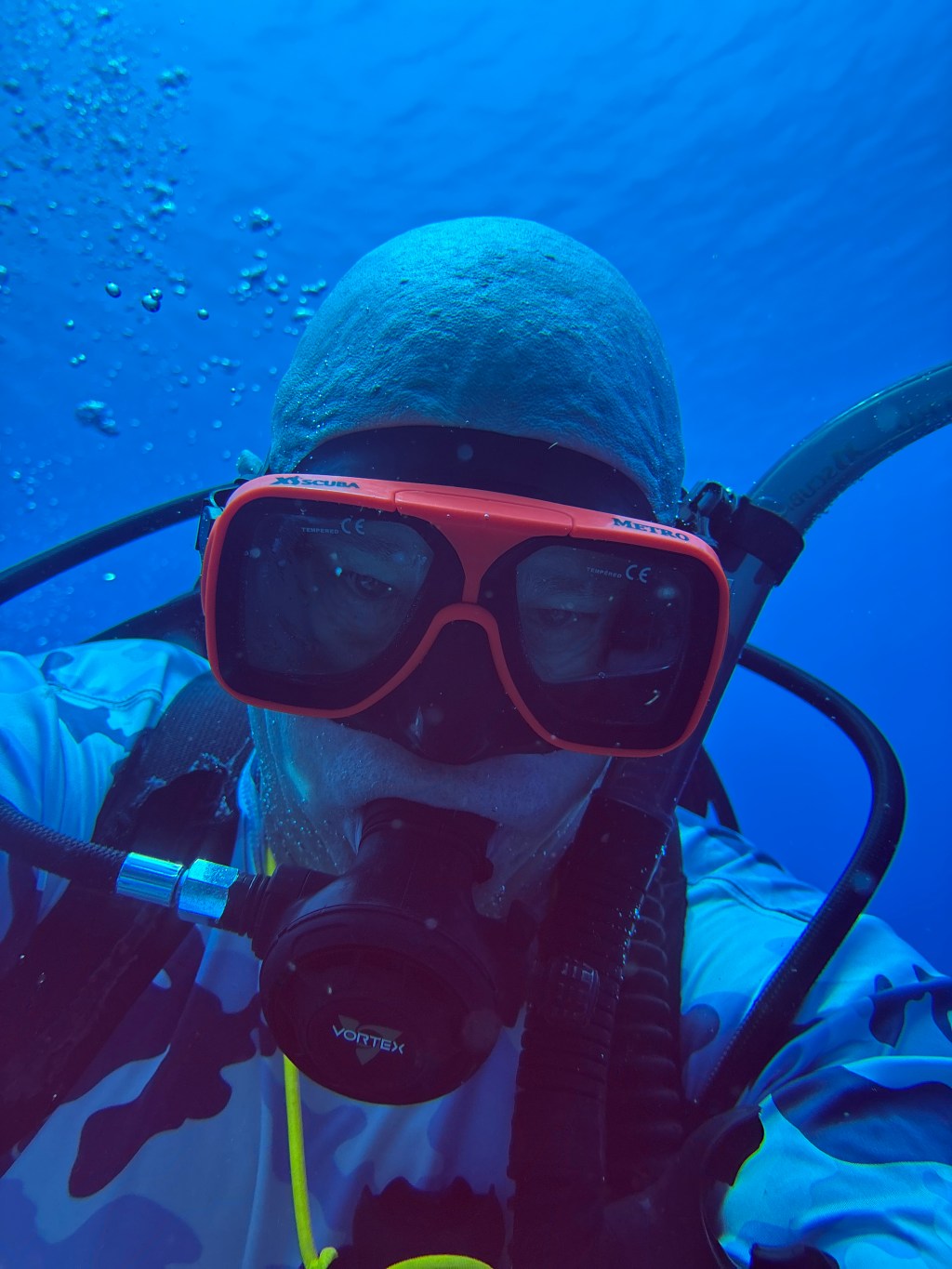

 The Neptune Warrior
Leave a comment