
Picture this: a secluded lake, nestled in a hidden corner of the wilderness, where the only way in is a grueling hike laden with diving gear. It’s a pristine oasis, seemingly untouched by time, and a place that beckons with the promise of underwater secrets waiting to be uncovered. As I tread carefully into the water, it’s not just the chilly embrace of the lake that sends shivers down my spine, but the anticipation of what lies beneath its glassy surface.
The decision to dive alone in this remote and challenging environment wasn’t a hard one to make. In fact, it was a welcome change from the daily grind of searching for dive partners who, more often than not, were unwilling to put in the effort required for such an endeavor. The allure of this untouched underwater world, coupled with the excitement of potentially stumbling upon lost artifacts from an old mining camp, made the prospect of solo diving here all the more enticing.
I love entering the water and watching the ripples, knowing that I am alone with my thoughts and the mysteries of the deep. It’s a peaceful solitude that has become a cherished part of my diving experience, where I can immerse myself fully in the beauty and enigma of the underwater world. With my gear meticulously prepared, all safety checks completed, and a small snack enjoyed, I am in my element.
Diving alone might be considered taboo by some, especially among those certified under certain agencies, and a cause for concern among non-divers who have only heard the golden rule: “Never dive alone.” However, I’m here to unravel the intricacies of this choice, and why, in certain situations, it’s the most prudent one.
Interestingly, SCUBA diving started as a solo endeavor, where enthusiasts could purchase their own equipment from local stores and venture out to explore the depths at their leisure. It was a simpler time, and finding a reliable air source was often as easy as visiting a sporting goods shop. However, as concerns over safety grew, equipment distribution became more regulated, ultimately leading to the birth of dive training agencies.
With the emergence of these agencies came standardized courses, and buddy diving became a fundamental aspect of diver training. While the concept of a dive buddy was crucial in the early days when equipment had numerous failure points and diving knowledge was in its infancy, it’s important to understand that this rule was established before the advent of modern diving equipment. Back then, factors like limited visibility and the relative inefficiency of the gear at the time made buddy diving a safety necessity.
Yet, there are situations where diving alone can be the safer choice. Conditions like low visibility, silt-outs, and other underwater challenges often necessitate solitary problem-solving to avoid putting a buddy at risk.
My training in solo diving came to the forefront during my time in New Jersey, where every wreck dive in the North Atlantic, even when with a dive buddy, essentially turned into a solo dive. As we descended to the anchor line, gave the OK signal, and entered the murkiness, we understood that our exploration would be largely individual. Tight spaces, limited visibility, and different objectives often led to solitary journeys beneath the waves.
For me, diving alone is a deliberate choice. It enables me to explore the places I’m passionate about, on my schedule, and in the challenging conditions that I relish. Whether I’m in Idaho, where finding dive buddies is a near impossibility, or in places like Texas, New Jersey, Hawaii, or Saudi Arabia, where the freedom to pack my gear and go whenever I please has been a cherished part of my life.
Many of the dive sites I’m drawn to don’t interest others, and it’s not a matter of ego. Trusting most divers to assist me is a gamble I’m unwilling to take, and when I do want to help fellow divers, I prefer to guide those who are still learning the ropes.
Diving alone offers me an opportunity to be still and observe. I can spend a mesmerizing 15 minutes watching a motionless catfish without realizing how swiftly time has passed. Moreover, I have my secret spots, where I hope to uncover hidden treasures. These are locations I choose not to share with others to preserve their mystery.
Beyond the thrill of adventure, there’s another dimension to diving alone that often goes unexplored. In the depths of solitude, I can experience self-reflection and find inner peace. Studies have shown that being alone in the underwater world can lead to profound psychological benefits. This solitary exploration allows me to escape the cacophony of daily life and engage with the soothing, silent world beneath the surface.
In a world filled with constant noise and distractions, diving alone is my sanctuary. It’s a way to savor the unique experiences that only solitude beneath the waves can offer. And, who knows, I might just uncover a long-lost artifact from an old mining camp hidden in the depths of the secluded lake, adding another layer of mystery to my solo diving adventures.

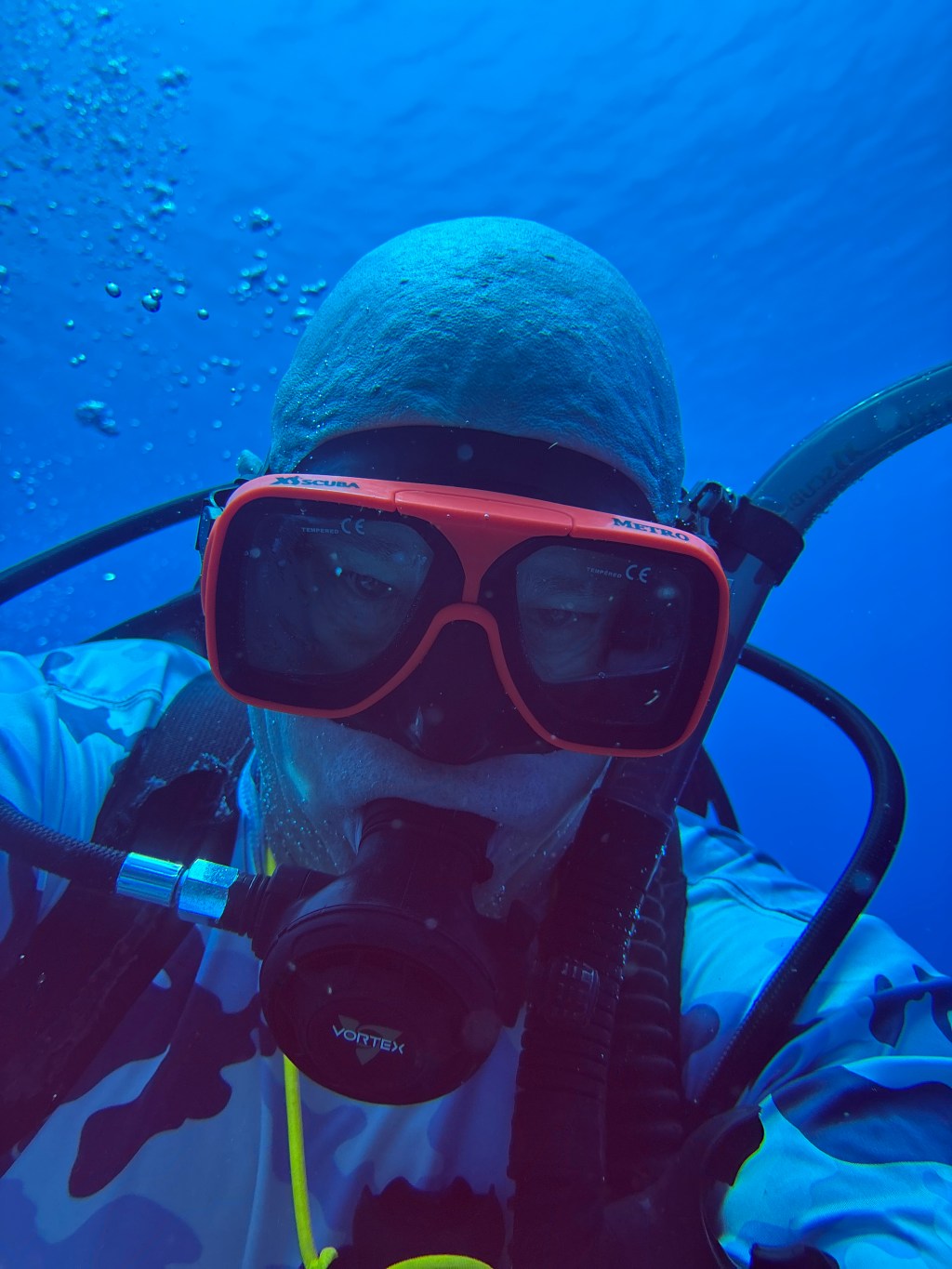


 The Neptune Warrior
Leave a comment