
In the world of scuba diving, true navigation begins in the human heart. As Elizabeth Kapu’uwailani Lindsey beautifully puts it, “It’s the most important map of all.” Just like the compass guides divers through the underwater world, our inner compass directs us in the journey of life. In this blog, we explore the psychology of finding oneself, drawing parallels with the art of underwater navigation, and embracing the idea that we all have a unique destination in mind.
Diving Deep into the Art of Navigation
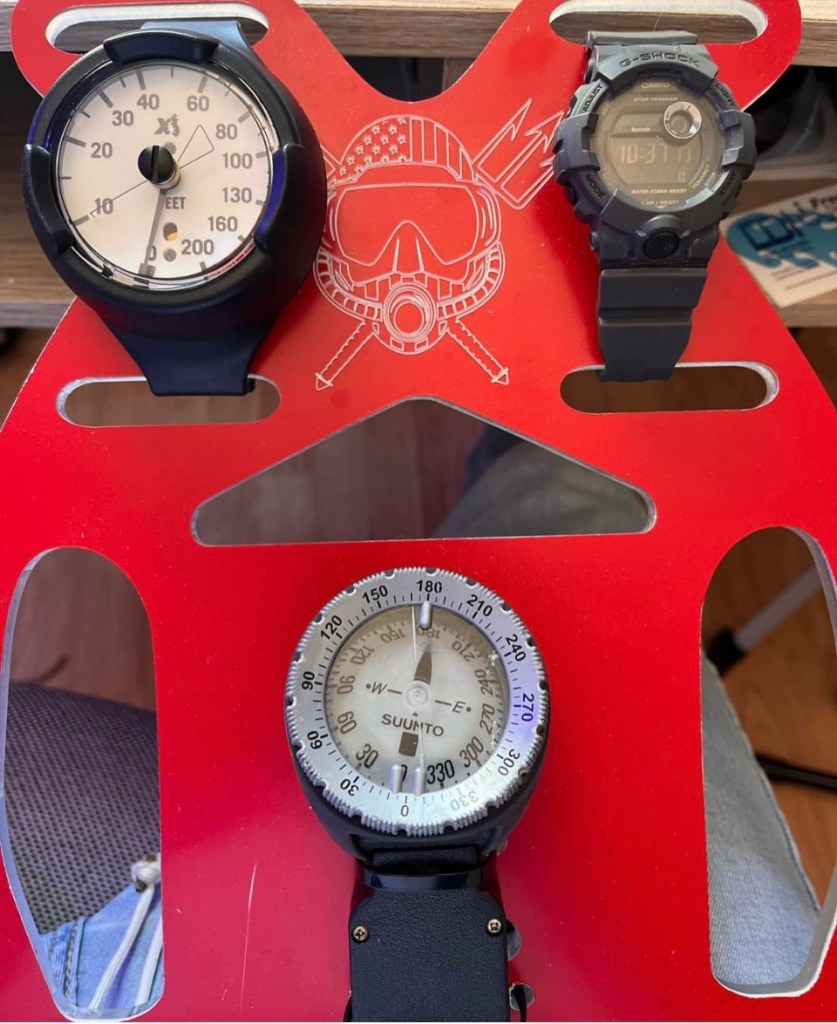
Recently, I had the privilege of working with a group of experienced divers on underwater navigation. To me, this skill is akin to a gem in the treasure chest of diving techniques. Whenever time allows, I make sure my students receive an extra dose of compass work. The compass’s evolution from simply indicating the direction of North to the modern 360-degree compass has a rich history. It has played a pivotal role in enabling armies to strategize, economies to flourish, and explorers to chart new worlds.
This history isn’t just a straightforward tale; it’s a tapestry of intrigue and secrets. Some ancient military traditions and trade routes guarded the knowledge of compass navigation closely, even to this day. The magnetic compass, though initially invented in China, transformed Europe’s prosperity by facilitating exploration, trade with the Americas, and access to the Indian Ocean. Before the compass, sailors relied on celestial navigation and landmarks, limiting their horizons.
Historical Significance of Navigation: Trade, Exploration, and Conquest
The compass, in all its forms, played a pivotal role in shaping history. Trade, exploration, and conquest owe a considerable debt to this simple yet revolutionary tool.
- Trade: During the medieval and early modern periods, the compass became a closely guarded trade secret among seafaring nations. European powers harnessed its power to explore new trade routes and establish profitable connections with far-flung corners of the world. The compass was instrumental in unlocking access to the lucrative Indian Ocean trade routes, greatly enhancing the economic prosperity of Europe. Its ability to navigate accurately over vast distances transformed the face of trading and spurred economic growth.
- Exploration: The compass was a cornerstone of exploration during the Age of Discovery. Renowned explorers like Christopher Columbus, Ferdinand Magellan, and countless others relied on the compass to undertake their groundbreaking journeys. This trusty tool was their unerring guide, leading them to new continents and discoveries. Without the compass, their voyages may have ended in uncertainty, rather than the history books.
- Conquest: For militaries, the compass was more than a mere tool; it was a strategic asset. The ability to navigate precisely allowed armies to conquer new territories with remarkable efficiency. Some military traditions and trade routes closely guarded compass navigation as a critical secret. Even today, some armed forces restrict compass usage to officers, underscoring the tool’s continued importance in both conquest and protection.
As divers master the compass to explore the depths of the ocean with confidence, the history of the compass resonates with the confidence it inspired in explorers, traders, and conquerors throughout the ages.
Navigating Life with Confidence
Underwater navigation skills offer more than just practicality; they grant divers the freedom to plan and execute dives independently with their buddies. These skills boost confidence, creating a noticeable distinction between divers who’ve mastered the compass and those who possess only a basic understanding.
However, it’s important to recognize that a compass doesn’t reveal your exact location. Apart from determining North, it doesn’t prescribe a course. The responsibility lies with the diver to set and follow their chosen direction. Without a map or starting point, you’re essentially adrift.
Additionally, a compass is vulnerable to errors. It can be thrown off course by proximity to metal, exposure to magnetic interference, or even the presence of a dive computer. Maintaining the compass level and holding it steady are paramount to staying on track.
Sometimes, life may throw us into situations with “zero visibility,” and we must rely on our inner compass. Just like in the underwater world, starting from a known point or objective, we set a direction and move forward. If we become disoriented, we backtrack using the reciprocal direction. Or, if we’re feeling adventurous, we explore in a square pattern while always having a way to return to our starting point.
Metaphorically, the compass isn’t limited to the world of diving; it transcends into our daily lives. What direction are you following, and do you have a map or chart to guide you, or are you navigating uncharted waters?
Finding My Own Path
For me, this realization dawned a few years ago when I was on the brink of a divorce, carrying a hefty $60,000 debt. My “map” had the endpoint of more dive travel without accumulating further credit card debt. On this map, there were specific waypoints I had to navigate first: reducing credit card debt, increasing my income, paying off student loans, and more. My “compass” took the form of prudent financial decisions: cooking at home, taking on extra jobs, curbing unnecessary expenses, preparing more meals, and scrutinizing my monthly budget.
The combined guidance of my “map and compass” led me to pay off the $60,000 debt and trim my monthly expenses by $2,000. It also steered me toward a new career as a financial coach, helping others achieve similar financial freedom.
So, what’s your destination, and what compass are you using to navigate life’s journey? Just as divers trust their compass to explore the mysterious depths of the ocean, trust your inner compass to guide you toward the uncharted territories of your dreams and aspirations. After all, as Elizabeth Kapu’uwailani Lindsey wisely reminds us, true navigation begins in the human heart. It’s the most important map of all.
References:
- “A Brief History of Navigation.” National Geographic. https://www.nationalgeographic.org/maps/a-brief-history-navigation/
- “The Evolution of Navigation: From Compass to GPS.” Maritime Executive. https://www.maritime-executive.com/blog/the-evolution-of-navigation-from-compass-to-gps
- Kidd, Sue Monk. “The Dance of the Dissident Daughter: A Woman’s Journey from Christian Tradition to the Sacred Feminine.” HarperOne, 1997.
#ScubaDiving #Mindfulness #ZenLife #MentalHealthMatters #SelfHelp #InnerPeace #UnderwaterExploration #DiveIntoCalm #WellnessJourney #PositiveMindset #DeepBreaths #StressRelief #EmotionalWellbeing #SelfImprovement #AquaticAdventures #TranquilDives #MindfulLiving #CalmWaters #WellnessWarrior #MentalClarity #MindfulDiver #DiscoverYourself #DiveDeep #MeditationJourney #ZenMind #SelfCareEveryday


 The Neptune Warrior
Leave a comment