
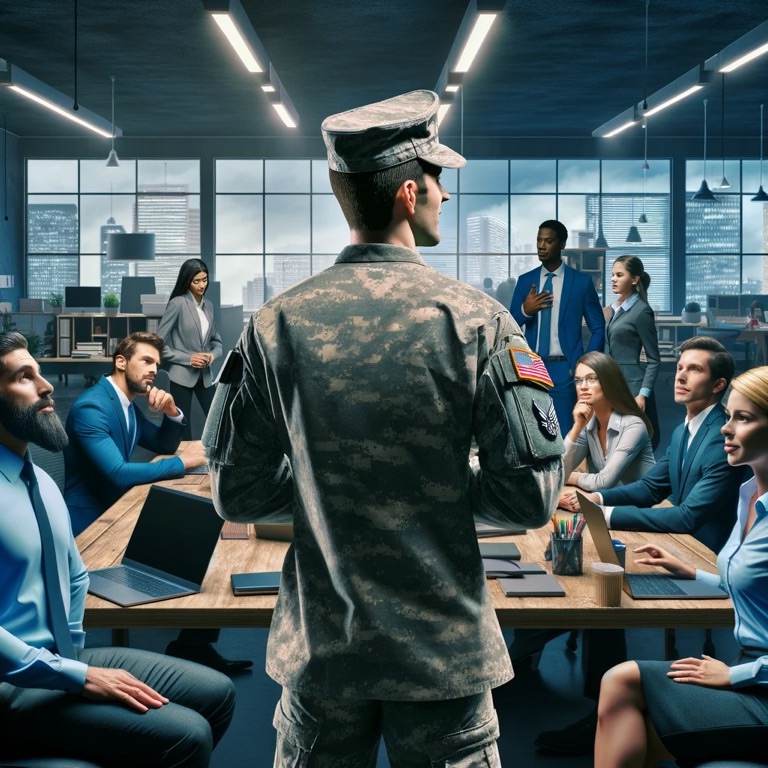
It began with small, almost negligible incidents. I remember sitting in a meeting where a colleague, a former army officer, was explaining a strategy using military terminology. A few others in the room rolled their eyes, and one even muttered, “Here we go with the military talk again.” The disdain was palpable, and the message was clear: his way of communicating, inherently tied to his military background, was not welcome here.
Subtle Exclusion and Dismissal
As days turned into weeks, I noticed more instances. There was a pattern in how my veteran colleagues’ suggestions, often communicated in their distinctive jargon, were dismissed. Their approach to problem-solving, honed in the most challenging environments, was often overlooked, sometimes even ridiculed. It was as if their military background was a barrier, rather than a rich source of experience and insight.
The impact of this discrimination wasn’t just professional; it was personal. I saw how it eroded their confidence and sense of belonging. These were individuals who had served our country, yet in the workplace, they felt the need to suppress a significant part of their identity. The message was clear: to fit in, they had to shed their military skin.
A Particularly Jarring Incident
One incident remains vivid in my mind. During a team-building exercise, a veteran colleague used a military analogy to describe teamwork. Instead of engaging with the idea, the facilitator publicly reprimanded him for using “exclusive language.” The irony was heartbreaking; in a session meant to foster unity, a veteran was singled out for his military background.
In our diverse and inclusive workplaces, we often celebrate a variety of cultural and linguistic backgrounds. Yet, there’s one aspect of workplace diversity that tends to be overlooked: the unique language and communication style of military veterans. This blog post delves into why it’s not only appropriate but beneficial to embrace military jargon in the office.
Understanding the Military Communicative Style
Military personnel bring a unique set of experiences and training to the civilian workforce. The use of military jargon isn’t just a habitual choice; it’s a reflection of their identity and professional background. This jargon encompasses more than just words; it includes a way of thinking and approaching tasks that can be incredibly valuable in a corporate environment.
Respecting Diversity and Protected Class Status
Respecting and accommodating the communication style of veterans is akin to honoring the cultural and linguistic diversity of employees from various ethnic and racial backgrounds. Veterans are recognized as a protected class under various employment laws, and this status calls for an acknowledgment and respect for their unique characteristics, including their mode of communication. Asking veterans to abandon their military jargon could be perceived as a lack of respect for their past service and experiences.
The Mutual Benefit of Military Jargon in Civilian Context
The adoption of military terminology in civilian business contexts (e.g., “boots on the ground,” “in the trenches”) demonstrates the practicality and applicability of this jargon. It fosters directness, clarity, and a straightforward approach to problem-solving and decision-making. Furthermore, it enhances the diversity of perspectives in workplace communication, which can lead to more innovative solutions and strategies.
Promoting Inclusivity and Integration
Encouraging veterans to use their natural mode of communication helps them feel more integrated and valued in the workplace. It acknowledges their past and helps bridge the gap between their military and civilian roles. This inclusivity is vital for creating a workplace environment where all employees feel respected and are encouraged to bring their whole selves to work.
The Case for Mutual Adaptation and Enhanced Communication
Workplace communication thrives on mutual understanding and adaptation. Just as it wouldn’t be appropriate to ask someone from a different cultural background to completely adapt their speech, the same consideration should extend to military veterans. Military jargon, known for its precision, can actually contribute to more effective and efficient communication within the workplace.
Embracing Military Jargon as a Step Towards a Truly Diverse Workplace
Reflecting on these experiences, I feel a deep sense of injustice. These veterans bring unique perspectives and skills, forged under circumstances most of us can’t even fathom. Yet, instead of valuing this, we often find them being sidelined, their experiences and contributions undervalued.
This needs to change. We must strive to create a workplace culture that truly values and respects the diversity of all its members, including those who have served in the military. Their experiences, and indeed their way of communicating these experiences, are assets, not liabilities. It’s time we recognize and celebrate the rich tapestry of backgrounds and perspectives that each individual brings to the table, military veterans included.
In conclusion, the integration of military jargon in the workplace is more than a nod to the experiences of veterans; it’s a step towards a truly diverse and inclusive work environment. By embracing this unique form of communication, we acknowledge and respect the contributions of military personnel, enhance our communication repertoire, and promote a culture of inclusivity and mutual respect. Let’s champion the diversity of all backgrounds, military included, to create a more dynamic, respectful, and effective workplace.
#MilitaryPride #DiverseWorkplace #InclusiveCommunication #DEI #veteran #DEIcouncil #diversity #inclusion



 The Neptune Warrior
Leave a comment