
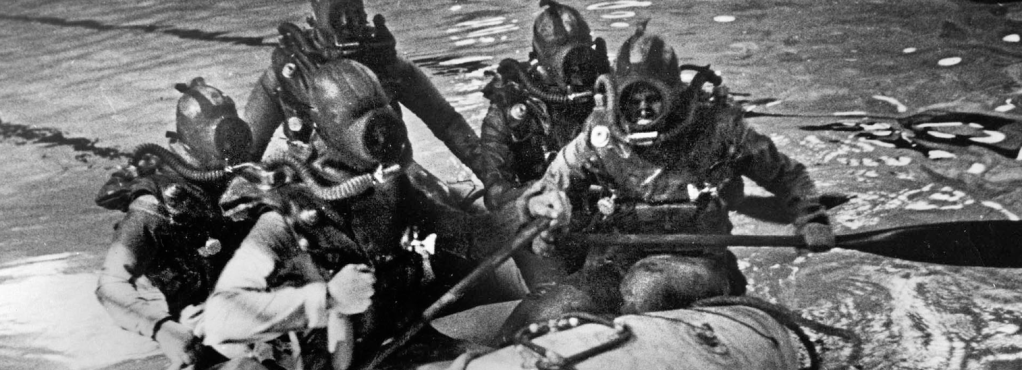
While most of us think about those who landed on beaches from landing craft or those who went in on gliders and parachutes, there is a breed of warrior that has been lost in time. The Frogman. While this article focuses on the U.S. contribution to underwater warfare, our allies had combat divers as well.
On June 6, 1944, the world witnessed one of the most significant military operations in history: the Allied invasion of Normandy, known as D-Day. Amidst the waves of soldiers, ships, and aircraft, a group of brave and highly skilled men known as the frogmen played a crucial role in ensuring the success of the invasion. These men, members of the U.S. Navy Underwater Demolition Teams (UDTs), undertook dangerous missions that were vital to the operation’s success.
The Role of the Frogmen
The frogmen, often referred to as the precursors to modern US Army Combat Divers, Marine Recon, USAF special Tactics Teams, and of course Navy SEALs, were tasked with several key responsibilities during the D-Day invasion. Their mission included beach reconnaissance, obstacle demolition, and marking safe passageways for the incoming landing craft. These tasks were essential for clearing the way for the massive amphibious assault on the heavily fortified beaches of Normandy.
Pre-Invasion Preparations
Before the main invasion, the frogmen underwent rigorous training to prepare for their critical tasks. They were trained in demolition techniques, swimming, and reconnaissance, becoming adept at operating in all types of water conditions and handling explosives.
In the weeks leading up to D-Day, some frogmen conducted covert reconnaissance missions to gather detailed information about the German defenses. They sketched maps, identified obstacles, and assessed beach gradients, providing invaluable intelligence for planning the landings.
Execution on D-Day
On the night before the main invasion, many frogmen went ashore to place explosive charges on obstacles and conduct last-minute reconnaissance. This was a highly risky endeavor, as they had to avoid detection by German patrols.
On the morning of June 6, just before the first wave of infantry landings, the frogmen detonated their charges to destroy beach obstacles. The timing had to be perfect to avoid harming the incoming troops while ensuring the paths were cleared.
Despite facing intense enemy fire, the frogmen adapted quickly to the chaotic battlefield environment. Their ability to improvise and adjust their plans on the fly was crucial to their success.
Specific Operations
Omaha Beach: Omaha Beach presented one of the toughest challenges due to its strong German defenses. Frogmen from NCDUs 11, 22, 23, and 41 faced heavy fire. Despite suffering significant casualties, they managed to clear substantial portions of the beach, allowing subsequent waves to land.
Utah Beach: At Utah Beach, the frogmen encountered slightly better conditions and were able to clear obstacles more effectively. Their success here contributed to the relatively smoother landings compared to Omaha.
Sword, Juno, and Gold Beaches: Frogmen also operated on the British and Canadian sectors. Their contributions in these areas were equally vital, ensuring that the Allies could establish beachheads across the entire Normandy coastline.
Challenges and Innovations
The frogmen developed innovative techniques for underwater demolition, using a variety of explosives and detonation methods. Their expertise in handling explosives safely and effectively was a key factor in their success.
The frogmen faced high casualty rates due to the hazardous nature of their work. Many were injured or killed by enemy fire or underwater explosions. Their courage and determination under such conditions are a testament to their dedication.
The Germans had placed thousands of obstacles on the beaches, including mines and barbed wire. The frogmen had to quickly adapt to these defenses, often under direct fire, to accomplish their mission.
Post-Invasion Impact
The initial success of the D-Day landings owed much to the work of the frogmen. Their efforts allowed the Allied forces to establish a crucial beachhead and begin the liberation of Western Europe.
The heroism and effectiveness of the UDTs on D-Day laid the groundwork for the formation of future special operations units. The tactics, training, and spirit of the frogmen continue to influence modern special operations forces.
The contributions of the frogmen have been recognized through various honors and memorials. Their legacy is celebrated as a vital part of the Allied victory in World War II.
Remembering the Frogmen
The story of the frogmen on D-Day is one of bravery, skill, and unwavering dedication. Their actions on the beaches of Normandy played a pivotal role in one of history’s most significant military operations. As we remember D-Day and the heroes who fought for freedom, let us not forget the frogmen whose sacrifices and achievements paved the way for victory.


 The Neptune Warrior
Leave a comment