
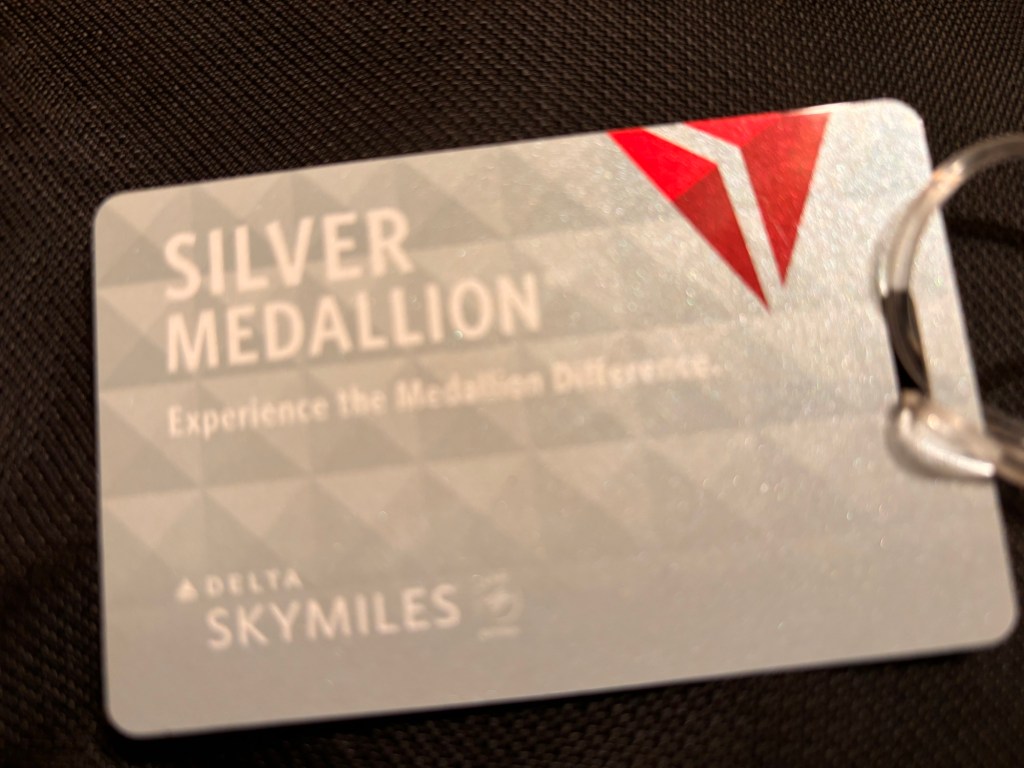
I still remember the rush of excitement when I achieved frequent flyer status. The moment I held that card in my hand, it was as if I had been granted entry into an exclusive club. A surge of dopamine flooded my system, leaving me eager to explore the perks that came with my new status.
Early boarding was a game-changer. No more jostling in long lines or struggling to find overhead bin space. Instead, I strolled down the jet bridge with a sense of calm and privilege, knowing I’d have my pick of spots for my carry-on. It felt like the airport version of a red carpet moment.
Then came the upgrades. Sitting in a premium seat without the premium price tag felt like winning a small lottery. Each time I was ushered to a seat with extra legroom or a better view, it reinforced the sense that my loyalty was being rewarded in a very tangible way.
But beyond the material perks, there was a deeper sense of accomplishment. It was a validation of my dedication and a reminder that, sometimes, the journey is just as rewarding as the destination.
But as the miles piled up, so did the wear and tear—not just on my body, but on my spirit. There were times when I’d catch myself booking flights instead of doing Zoom meetings not because I wanted to go somewhere, but because I was chasing a number. I’d take circuitous routes, adding layovers and extra legs, all for the sake of racking up points. It started to feel less like an adventure and more like an obligation.
The Psychology Behind it All
The psychology of racking up frequent flyer points and achieving status in a frequent flyer club taps into several deep-seated motivations and behavioral principles that drive human behavior. People don’t just accumulate points to get free flights; there’s much more at play. Here are some key psychological factors involved:
1. Status and Prestige
Achieving higher statuses in frequent flyer programs (like Gold, Platinum, or Elite tiers) gives a sense of prestige and belonging to an exclusive group. This taps into social identity theory, where individuals seek to be part of distinguished groups. Higher statuses offer not just perks but also the perception of being a “valued customer,” boosting one’s self-esteem and social status.
2. Achievement and Goal Orientation
Frequent flyer programs gamify travel by offering milestones to hit, points to collect, and statuses to achieve. This creates a sense of accomplishment, similar to completing levels in a game. The goal-setting theory plays a part here—travelers set clear targets (e.g., achieving a specific tier) and are motivated by their progress toward these goals. The harder the goal is to achieve, the more rewarding it feels when it’s attained.
3. Delayed Gratification
The act of accumulating points encourages delayed gratification, a powerful psychological principle. Passengers may fly more, sometimes even inconveniently, just to earn points toward future rewards like free upgrades or flights. The anticipation of future rewards can be a greater motivator than the immediate benefits, as people derive pleasure from knowing that something great is awaiting them.
4. Loss Aversion
The fear of losing a status or points also comes into play. Loss aversion, a concept from behavioral economics, states that losses are psychologically more impactful than equivalent gains. Once someone achieves a status like “Elite” or “Platinum,” the idea of falling back to a lower status can drive them to make additional trips or purchases just to retain their perks, even if they don’t necessarily need to.
5. Perceived Value of Exclusivity
Frequent flyer programs often offer exclusive lounges, priority boarding, and other elite services that aren’t available to most travelers. Scarcity and exclusivity heighten the perceived value of these rewards. Even if the real-world value isn’t necessarily worth the effort, the exclusivity makes it feel more valuable, feeding into a sense of privilege and importance.
6. Reciprocity
Airlines often reward frequent flyers with small perks (early boarding, complimentary upgrades), which taps into the reciprocity principle. People feel inclined to “give back” by continuing to fly with the airline that rewards them, even if competing airlines might offer better prices or routes. The sense of being appreciated or rewarded fosters loyalty.
7. Endowment Effect
The endowment effect suggests that people place higher value on things they already possess. Once a traveler accumulates points or achieves elite status, they tend to overvalue what they’ve earned and are more motivated to maintain or increase that value. The longer they’ve been loyal to a specific airline, the stronger this effect becomes.
8. Social Proof and Peer Influence
For many, frequent flyer status is also about visibility. People enjoy the subtle social signal it sends to fellow travelers when they board first or sit in premium areas. Social comparison theory comes into play here, as travelers may feel validated or superior when comparing themselves to others who don’t have the same benefits.
9. Competitiveness and Bragging Rights
In some circles, achieving elite frequent flyer status becomes a competitive activity. Frequent flyers sometimes take pride in how many miles they’ve flown, what status they’ve achieved, and the number of upgrades they’ve received. There’s even a form of competitive social comparison, where frequent flyers subtly (or not so subtly) share their achievements to outshine others, leading to a sense of validation and social superiority.
10. Cognitive Dissonance and Rationalization
Frequent flyers may often justify irrational behaviors (like booking less convenient flights or making unnecessary trips) to maintain or increase their status. Cognitive dissonance arises when people’s actions don’t align with their rational self-interest (like paying more for the same flight just to gain more points). To resolve this internal conflict, they rationalize their behavior by focusing on the benefits of status (e.g., “It’s worth it for the upgrade and lounge access”).
11. Loyalty and Habit
Many frequent travelers become loyal to a particular airline or alliance because of the habitual nature of their travel patterns. Habit formation reinforces brand loyalty, especially once someone starts receiving rewards or recognizing patterns of positive reinforcement (free upgrades, lounge access, etc.).
Summary
Frequent flyer programs are carefully designed to tap into these psychological principles to keep travelers loyal, motivated, and engaged, creating a cycle where the pursuit of points and status becomes almost addictive.
In pursuing status, I found myself sacrificing a lot—time, energy, and often, my own peace of mind. Red-eye flights and layovers in unfamiliar cities left me drained. I started to realize that no amount of lounge access or complimentary upgrades could make up for the exhaustion that came with it.
There’s this glorification of the journey in travel—people talk about how “it’s the journey, not the destination,” but I started to question that. When you’re sitting in a cramped middle seat at 2 a.m., sleep-deprived and surrounded by strangers, it’s hard to romanticize the experience. I began to see that, for me, it really was about the destination.
The moments of finally arriving, stepping into a new city or a familiar one, were the real rewards. But the journey? It was often a blur of airports, security lines, and racing to gates. There’s no amount of status that can make that feel magical.
So while frequent flyer status might give you perks along the way, the real value lies in where you’re going, not in how many miles you’ve flown to get there. Looking back, I wonder if I could have spent less time focusing on the numbers and more time embracing the destinations—the people I met, the experiences I had, the places that truly left an imprint on me.



 The Neptune Warrior
Leave a comment